Wednesday, August 31, 2016

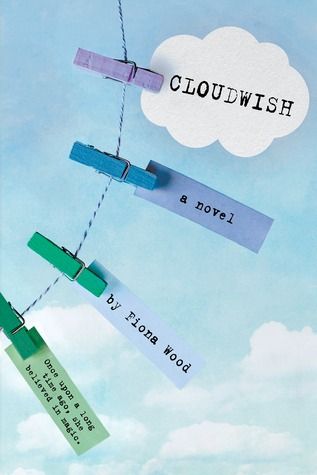
Cloudwish by Fiona Wood

Title: Cloudwish
Author: Fiona Wood
Publisher: Poppy
Publication date: October 18, 2016
Rating: ★★★★½

Summary (via Goodreads):

For Vân Uoc, fantasies fall into two categories: nourishing or pointless. Daydreaming about attending her own art opening? Nourishing. Daydreaming about Billy Gardiner, star of the rowing team who doesn't even know she's alive? Pointless.

So Vân Uoc tries to stick to her reality--keeping a low profile as a scholarship student at her prestigious Melbourne private school, managing her mother's PTSD from a traumatic emigration from Vietnam, and admiring Billy from afar. Until she makes a wish that inexplicably--possibly magically--comes true. Billy actually notices her. In fact, he seems to genuinely like her. But as they try to fit each other into their very different lives, Vân Uoc can't help but wonder why Billy has suddenly fallen for her. Is it the magic of first love, or is it magic from a well-timed wish that will eventually, inevitably, come to an end?
A million thanks to the publisher for sending me an advance copy. Cloudwish hooked me from the very beginning and did not disappoint.

While the story itself is compelling (give me the "girl and boy come from two different worlds and fall in love?" trope any day of the week... especially if mixed class or mixed race relationships are involved), I was most notably blown away by how personal it felt and how deeply I could relate to Vân Ûóc and her thoughts and feelings and experiences.

Let me be very clear: Vân Ǔóc and I come from two different backgrounds. I am Taiwanese-American with parents who immigrated to America out of their own free will. They went to college in Taiwan and were able to pursue further education when they moved to the States. They had NOTHING when they came here but they were not refugees by any means. In spite of our differences, I still understood Ván Ûóc as though I were reading my own diary.

Having grown up in a suburb filled with affluent white kids, I know the feeling of being an "other." I understand the social navigation, the responsibilities, trying to measure up and fit in, trying to keep school and home separate, the shame of being part of a different culture, and the guilt that comes from feeling ashamed at all...

But I also know what it's like to balance all of that with dreams. And expectations. I was the English-loving STEM student who spent her lunch hour in the art room working on mixed media pieces or in my sketchbook and tutoring kids who needed physics help after school. The premise behind my AP Studio Art portfolio? Head vs. heart. Home. Belonging. Choices. I applied to college as an engineering major. (And eventually transferred into the humanities.)

So I get it.

How refreshing to see a fragment of my own experiences reflected back at me. (How silly that such a small thing feels "refreshing"—for white readers, this is just a given.) But Ván Ûóc is smart and thoughtful and proud and insecure and observant and dedicated and driven and creative and reflective and funny and socially conscious and politically aware and practical and daydreamy and weird and a typical teenage girl and also not a typical teenage girl at all. She reminds me of myself at age 17. Kindred spirits. I can't help but think that if I had read this book back then, I would have been all the better for it. I could have learned a lot from a girl like Ván Ûóc when I was 17.

But back to the book itself. The story was charming, and the characters delightful and sincere and real. (I'm so glad Michael showed up again. He was my favorite in Wildlife, so I was pleased to see him still doing his thing. I also liked Billy Gardiner—he's kind of a lovable idiot who is courteous and means well and is very polite to parents but is self-assured and arrogant and maybe a little offensive and ignorant because he was born and raised privileged. He reminded me of some of the boys I knew in high school, whom I looked at in very much the same way that Ván Ûóc looks at Billy.)

The relationships are complex and varied—there's friends and then there's school friends, and first love, of course... But you also have a mother/daughter relationship that is riddled with the complexity of culture "clash" and additional baggage, and it makes the interactions feel that much more poignant and sweeping. And the writing was rich and clever—what a voice. It carried me through the pages and left me satisfied but also still wishing I could stay just a little longer.

Books that feature POC characters and are written by white authors can often go awry, but I thought this was done incredibly well. To me it really feels like the author did her due diligence in researching and speaking with many actual Vietnamese people—in other words, letting Ván Ûóc speak her story without it being muffled or slanted by white preconceptions. Does the story rely on certain stereotypes? Sure. But those stereotypes exist and are still relevant today, so I'm happy to see those stereotypes (and their effects/influences) as an important aspect—but not the main focus—of this story.

Anyway. This review has turned into one massive blog entry so I'll sign off here and just leave you with this: Cloudwish is easily my favorite Fiona Wood book by far. I feel blown away and want to flip back to the very beginning and reread it all again right away.

Wednesday, October 14, 2015

Review: The Assassin's Blade by Sarah J. Maas

Title: The Assassin's Blade (Throne of Glass #0.1-0.5)
Author: Sarah J. Maas
Publisher: Bloomsbury Children's
Publication date: March 4, 2014
Rating: ★★★★½

Summary (via Goodreads):

Celaena Sardothien is Adarlan's most feared assassin. As part of the Assassin's Guild, her allegiance is to her master, Arobynn Hamel, yet Celaena listens to no one and trusts only her fellow killer-for-hire, Sam. In these action-packed novellas - together in one edition for the first time - Celaena embarks on five daring missions. They take her from remote islands to hostile deserts, where she fights to liberate slaves and seeks to avenge the tyrannous. But she is acting against Arobynn's orders and could suffer an unimaginable punishment for such treachery. Will Celaena ever be truly free? Explore the dark underworld of this kick-ass heroine to find out.

I've been rereading the first three Throne of Glass novels to refresh my memory in preparation for Queen of Shadows, and I finally had the chance to read The Assassin's Blade, which includes all five of the pre-Throne of Glass novellas: The Assassin and the Pirate Lord, The Assassin and the Healer, The Assassin and the Desert, The Assassin and the Underworld, and The Assassin and the Empire.

This review contains spoilers for those who have not yet read Throne of Glass and Crown of Midnight so proceed with caution, my little darlings.

I have always loved Celaena, in spite of her haughtiness and arrogance, or maybe because of it. I have always admired her. I loved her even more in Heir of Fire, watching her grow exponentially, seeing her confront her biggest fears and challenges.

But The Assassin's Blade made me respect and admire and feel for her infinitely more. It's that feeling you get in the pit of your stomach, when you're observing something and you already know it's going to end badly. It's like watching a train come off its tracks – fascinating and horrifying and dreadful all at once. This is what it's like to read these novellas.

It's almost upsetting to hear her talk of the life she will lead once she's free of Arobynn Hamel – all you want is for her to be happy and for her to live the life she deserves… and for a moment, you almost forget that Sam dies and that Celaena ends up in Endovier and that everything else happens. For a moment, you entertain that dream with her. For a moment, you imagine what her life could have been had she stayed in the Red Desert from The Assassin and the Desert – not the most lavish of destinations, but maybe something good for her soul. How different things would be.

It's hard to watch things start to backfire, from the slave deal in The Assassin and the Pirate Lord, all the way to her sentence to Endovier in The Assassin and the Empire. Just thinking about it makes my heart squeeze painfully. I can't even get into what happens with Sam in The Assassin and the Underworld. Like, my brain will just not even go there.

And that's only the beginning of her story. To think about everything else Celaena has gone through… all this darkness that spans her life… she is one of the strongest characters I've ever read. You just want to tell Sarah J. Maas to give the girl a freaking break already. There's a line in Heir of Fire where Celaena says that she can't remember anymore what it feels like to be free. And reading that, and knowing all that happens in The Assassin's Blade, makes it so much harder to take.

I loved these stories. I love that they were meaningful and revelatory without being required reading. I love that they enhance the rest of the series – they make Celaena a more empathetic character; they reveal more of the world that Sarah J. Maas has built; they expand and play on little details mentioned briefly in the other books, like Dorian's sapphire eyes that feel like something she's forgotten, and the stolen Asterion horses from the Red Desert, and so much more… Such a treat for anyone who's read and enjoyed the Throne of Glass books.

Monday, October 5, 2015

Review: Wolf by Wolf by Ryan Graudin

Title: Wolf by Wolf (Wolf by Wolf #1)
Author: Ryan Graudin
Publisher: Little, Brown Books for Young Readers
Publication date: October 20, 2015
Rating: ★★★★½

Summary (via Goodreads):

Code Name Verity meets Inglourious Basterds in this fast-paced novel from the author of The Walled City.

The year is 1956, and the Axis powers of the Third Reich and Imperial Japan rule the world. To commemorate their Great Victory over Britain and Russia, Hitler and Emperor Hirohito host the Axis Tour: an annual motorcycle race across their conjoined continents. The victor is awarded an audience with the highly reclusive Adolf Hitler at the Victor's ball.

Yael, who escaped from a death camp, has one goal: Win the race and kill Hitler. A survivor of painful human experimentation, Yael has the power to skinshift and must complete her mission by impersonating last year's only female victor, Adele Wolfe. This deception becomes more difficult when Felix, Adele twin's brother, and Luka, her former love interest, enter the race and watch Yael's every move. But as Yael begins to get closer to the other competitors, can she bring herself to be as ruthless as she needs to be to avoid discovery and complete her mission?

Many thanks to Little, Brown Books for Young Readers (and NOVL) for sending me this electronic copy via NetGalley in exchange for my honest review.

Holy Scheisse!!! What a book. And what a thing to write about: a world in which Hitler won the war.

Let me start with my favorite thing about this book (a challenge, for sure, given the number of things I love about this book), and that is Ryan Graudin's writing, which is nothing short of remarkable. The subject of this novel is not, I imagine, an easy thing to write about – the events were ugly enough the first time around. To imagine some alternate universe in which those events only get amplified? Unthinkable. And yet, Graudin does an incredible job representing not only those events but also the internal thoughts and feelings of those who live them.

The writing is wild when it needs to be – a rhythmic beat that makes you feel primal and crazy and aligns perfectly with the savageness of this version of 1956. She writes about the human experience in such an accessible way, but it leaves you feeling raw and wondering how such ordinary words could make you feel so much. It's poetry, stark and brutal, and it makes you want to chant the words and stomp your feet on the ground.

Beyond the writing is the story itself: one girl's mission to get into the Axis Tour, win the race, and kill Hitler. Which is easier said than done, of course. And is layered with even more complexity when we discover the results of the Nazis' human experimentation and the main character Yael's ability to "skinshift" and take on other appearances. We get to watch as Yael fights against all odds to win the game. It's an exhilarating ride, and the story just propels forward.

This is a character-driven novel, and it's not. There isn't character development so much as character revelation, especially since we start from a place of unknowing. We meet Yael and right off the bat we can tell she's a tough one, a girl who has gone through unspeakable horrors and has somehow lived to tell the story, but we learn more and more about her – her weaknesses and insecurities, her self-perceived identity (or lack thereof), her history and the people who have made a mark in it (and upon in her skin in the form of a tattoo of wolves) and what has become of them. Wolf(e) by wolf(e), we discover all these things that make her human, even while she sees herself as a tool.

And the discovery starts with Yael, but it doesn't stop there. We realize that Felix Wolfe (twin brother of Adele Wolfe, last year's winner and the first and only female victor of the Axis Tour) is perhaps more than just an overprotective brother, and that Luka (Adele's former love interest and Yael's competitor) carries his own complicated and intriguing secrets. Even with Hitler and the Third Reich, there is more than meets the eye.

They're definitely not joking around when they say it's Code Name Verity meets Inglourious Basterds. Wolf by Wolf is brilliant and exciting and suspenseful and mind-blowing, and I already can't wait to get my hands on the sequel (Fall 2016!) that concludes this duology.

Thursday, July 30, 2015

Mini-Review: Ruin and Rising by Leigh Bardugo

Title: Ruin and Rising (The Grisha #3)
Author: Leigh Bardugo
Publisher: Henry Holt and Co.
Publication date: June 17, 2014
Rating: ★★★★½

Summary (via Goodreads):

The Darkling rules Ravka from his shadow throne.

Now the nation's fate rests with a broken Sun Summoner, a disgraced tracker, and the shattered remnants of a once-great magical army.

Deep in an ancient network of tunnels and caverns, a weakened Alina must submit to the dubious protection of the Apparat and the zealots who worship her as a Saint. Yet her plans lie elsewhere, with the hunt for the elusive firebird and the hope that an outlaw prince still survives.

Alina will have to forge new alliances and put aside old rivalries as she and Mal race to find the last of Morozova's amplifiers. But as she begins to unravel the Darkling's secrets, she reveals a past that will forever alter her understanding of the bond they share and the power she wields. The firebird is the one thing that stands between Ravka and destruction – and claiming it could cost Alina the very future she’s fighting for.

I don't know how to review this book. I can't stop thinking about it. Ruin and Rising left me wordless and reeling. Here's what happens when you read this book: Your heart pumps faster. Your body stills. Your throat clenches up. You gasp and cover your mouth at some parts. You cry and try not to screw up your face at others. You laugh one minute and you're somber again the next.

This book – this series, really – is a rollercoaster that I want to ride again and again until I can understand exactly how Leigh Bardugo put it together. She is uncannily good at teasing out every single emotion you could ever imagine, spinning a web of subtleties and gray areas until you're not sure what to think. You love a character something fierce and you question them with the turn of a page. You want to mourn and you want to sigh in relief and you secretly maybe want to find fan fiction that brings all of your favorite characters back to life. (Moi? Why, I would never.)

Everyone becomes a more intense version of themselves: the Darkling becomes ever more tragic. Mal becomes… truer, somehow. Steadier and more sure-footed. Alina becomes fiercer, stronger – and not just more powerful, but more demanding of what she wants and, maybe more importantly, what she needs. Nikolai manages to take "charming" to the next level – but also he becomes tangible in a way that he hasn't been before. He becomes human. He becomes real. And that's not even the whole squad. So many stories. So many motivations. So many histories that are hinted at, but that we'll never fully know (until Leigh Bardugo writes the epilogue to the epilogue, obviously).

I've been replaying words and events from this book in my mind for days and days. And days. (Really, it's been weeks if we're being technical.) I keep repeating things like "I CAN'T STOP THINKING ABOUT THIS BOOK" and "WHY LEIGH BARDUGO WHY" and I'm probably driving her crazy with my every-other-day tweets about how I'm still crying over these frickin' books. Can't stop, won't stop. Couldn't stop if I tried.

Monday, August 25, 2014

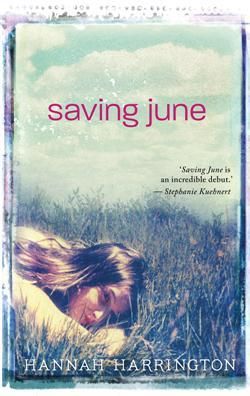
Review: Saving June by Hannah Harrington

Title: Saving June
Author: Hannah Harrington
Publisher: Harlequin Teen
Publication date: November 22, 2011
Rating: ★★★★½

Summary (via Goodreads):

Harper Scott’s older sister has always been the perfect one – so when June takes her own life a week before her high school graduation, sixteen-year-old Harper is devastated. Everyone’s sorry, but no one can explain why.

When her divorcing parents decide to split her sister’s ashes into his-and-her urns, Harper takes matters into her own hands. She’ll steal the ashes and drive cross-country with her best friend, Laney, to the one place June always dreamed of going – California.

Enter Jake Tolan. He’s a boy with a bad attitude, a classic-rock obsession and nothing in common with Harper’s sister. But Jake had a connection with June, and when he insists on joining them, Harper’s just desperate enough to let him. With his alternately charming and infuriating demeanour and his belief that music can see you through anything, he might be exactly what she needs.

Except June wasn’t the only one hiding something. Jake’s keeping a secret that has the power to turn Harper’s life upside down – again.

The one perk of being home sick is that you have a lot of reading time. I read this book in one sitting, and it was perfect for helping me escape my stomach flu (for a couple of hours, at least). Great character development, a sophisticated exploration of family and friendship, a road trip to California, and some eclectic playlists, to boot – thank you, Hannah Harrington. I loved this book.

Saving June has a cast of complex, intelligent characters who are flawed in many ways yet still have redeeming qualities. Harper, our narrator, is something of a dark horse – tired of constantly being compared to her sister June who has recently passed away; unable to express the "right" emotions at the right times; unwilling to pander to her dysfunctional, broken family. She's dark and cynical but also extremely self-aware, which is the balance the story needs to make it still readable, rather than angsty.

Laney is Harper's best friend and so great to read about. She's very different from Harper but she's a great friend to her (and vice versa) throughout the story. There are a bunch of lovely moments between them, and their dynamic never feels false. They fight and they argue, but they also make up, and at the end of the day, they support each other and fight for each other and take care of each other and defend each other.

"You know, just because you think bubblegum pop on the radio represents all that is wrong with society, that doesn’t mean there’s not someone out there who needs that shitty pop song. Maybe that shitty pop song makes them feel good, about themselves and the world. And as long as that shitty pop song doesn’t infringe upon your rights to rock out to, I don’t know, Subway Sect, or Siouxsie and the Banshees, or whichever old-ass band it is you worship, then who cares?"

And course we can't forget Jake Tolan, the imperfect love interest. I hate to use the term "bad boy" because it's so cliché – plus, he's not really a bad boy in Saving June. He's just different from his suburban Michigan neighbors. There's a lot of things I like about Jake. I like that he's kind of a grouch but he's still sensitive and thoughtful and optimistic. I like that he comes alive when he talks about music. I like that he sings "Tears in Heaven" for Harper (but I still can't believe she's never heard that song before... I mean, really?). I like that his story is revealed slowly.

Moments like these make me want more from him than I have ever wanted from any guy – or even just another person, period.

I do wish his backstory with June were more interesting or compelling – it felt kind of trivial, when all along it was made out to be this huge life-changing secret. I also wish he didn't own a fedora (why, Hannah Harrington, just why?). But he is one of the more captivating male characters I've read in a while, so I guess I'll give him a pass... for now.

A word of warning – Saving June explores family dynamics, but things don't always get resolved. If you like everything wrapped up neatly, i's dotted and t's crossed, this may not be the book for you. Mothers don't come back, and absentee fathers don't wake up one day and realize what they've been missing. Stuff remains ambiguous here. Relationships aren't always repaired. Questions aren't always – can't always – be answered. And I'm okay with that. I hope you are too.

Saving June is a great book. It's engaging and funny and sad but never bleak. We get to explore what it means to be alive in a way that feels thoughtful and candid and, ultimately, hopeful. This is a story of imperfect people and what happens when they come together. It's about the weird things that happen on a road trip and how you never really know what you're going to get. It's about how you deal with those things, what you learn from them. It's about what you let go of and what you let in.

Monday, August 11, 2014

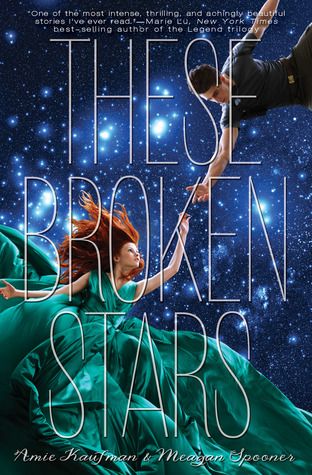
Mini Review: These Broken Stars by Amie Kaufman & Meagan Spooner

Title: These Broken Stars (Starbound #1)
Author: Amie Kaufman & Meagan Spooner
Publisher: Disney Hyperion
Publication date: December 10, 2013
Rating: ★★★★½

Summary (via Goodreads):

It's a night like any other on board the Icarus. Then, catastrophe strikes: the massive luxury spaceliner is yanked out of hyperspace and plummets into the nearest planet. Lilac LaRoux and Tarver Merendsen survive. And they seem to be alone.

Lilac is the daughter of the richest man in the universe. Tarver comes from nothing, a young war hero who learned long ago that girls like Lilac are more trouble than they’re worth. But with only each other to rely on, Lilac and Tarver must work together, making a tortuous journey across the eerie, deserted terrain to seek help.

Then, against all odds, Lilac and Tarver find a strange blessing in the tragedy that has thrown them into each other’s arms. Without the hope of a future together in their own world, they begin to wonder – would they be better off staying here forever?

Everything changes when they uncover the truth behind the chilling whispers that haunt their every step. Lilac and Tarver may find a way off this planet. But they won’t be the same people who landed on it.

Two words. Character. Development. These Broken Stars is chock full of it. It's glorious and magnificent, watching Lilac and Tarver slowly change their minds about each other. Their relationship is the most compelling part of the story, and its development is so well-paced that when you reach the end of the book you just want it to continue on for another 50 pages because their time together feels so hard-earned.

The story is written from two perspectives, but it feels cohesive – kudos to Amie Kaufman and Meagan Spooner. I didn't realize the book was co-authored until maybe halfway through; it was written that seamlessly. It must be the magic of Aussie lit – delicious, intense prose that makes your heart beat a little bit faster.

I'm somewhat disappointed that the next book in the Starbound series is about a different set of characters, because I don't feel that Lilac and Tarver's story is complete, and I don't know how much it can develop if it's told through someone else's point of view. At the same time, I'm glad that Amie and Meagan (yes, we're on a first name basis now, I've just decided) don't seem to be forcing them into a tired, played out, dystopian novel cliche. I'm happy to let them rest, so to speak. To me, Lilac and Tarver's relationship and personal growth are really the core of the story; everything else falls by the wayside.

Thursday, July 24, 2014

Review: Graffiti Moon by Cath Crowley

Title: Graffiti Moon
Author: Cath Crowley
Publisher: Knopf Books for Young Readers
Publication date: February 14, 2012
Rating: ★★★★½

Summary (via Goodreads):

Lucy is in love with Shadow, a mysterious graffiti artist.

Ed thought he was in love with Lucy, until she broke his nose.

Dylan loves Daisy, but throwing eggs at her probably wasn't the best way to show it.

Jazz and Leo are slowly encircling each other.

An intense and exhilarating 24 hours in the lives of four teenagers on the verge: of adulthood, of HSC, of finding out just who they are, and who they want to be.

I. Loved. This. Book. Graffiti Moon was filled with all of the things I need/want/adore in literature: thoughtful, funny characters who are simultaneously weird and normal; luscious writing that doesn't go over the top; relationships between people who see the best in each other. Plus, graffiti and art talk! Bonus!

The style itself is reminiscent of Hilary T. Smith's Wild Awake – with its quirky characters who are utterly imperfect but fit so well together – as well as Melina Marchetta's Jellicoe Road, which is likewise filled with compelling relationships and reckless boys and all around flawlessness. I am obsessed with both of these books, so surely that will tell you something about my reaction to this one.

Graffiti Moon is split into three perspectives, which work especially well here. Each character has such a unique, interesting voice that the multiple perspectives feel welcome. First there is Lucy Dervish who, much like her name, is dreamy and lyrical. She has interesting hobbies (glassblowing and staring up at the stars until her life feels insignificant) and interesting goals (to find Shadow). Her thoughts on love and art are the kind of thoughts you want to seep into your brain and contemplate for days on end.

Next comes Ed Skye. Ed is pensive. He's romantic. He's a little bit lost. But there's something in him – not a spark, exactly, but something that resembles embers burning beneath the surface. He feels hopeless, but he's hopeful in spite of himself. Ed has a strong artistic voice that is balanced with pragmatism. His pages are enchanting to read because everything he says sounds significant.

I felt like I needed to run but my skin wouldn't let me. I had this urge to throw cans at the windows so I could hear a noise that sounded like escape.

Finally, there's Leo the poet. Leo's pages are few and far between, but they are powerful. His poems are short and sweet, and by sweet, I mean honest and spot-on and desperate and hopeful and sad. Lucy and Ed are ultimately the heart of the story, but Leo's poems shed some much-appreciated light on what's happening elsewhere. His words provide a richness, a depth, to the story as a whole.

Lucy and Ed's relationship unfolds through candid conversation, which we experience in what feels like real time. We learn about their shared history. We fall in love as they each hold their own in their verbal (and non-verbal, as you'll see below) sparring. There's very much an "I'll show you mine if you show me yours" mentality between Lucy and Ed. It's all the better knowing who Ed is and being able to watch everything slowly unravel. That, my friends, is the right way to accomplish the slow burn. 

I look over at Ed. He's staring out the window giving Leo the thumbs-down. I wait till he's looking at me, then I give him two fingers up. He gives me two fingers back. I give him the middle finger. He gives it back to me. I don't know any more signs, so I make up one. Three fingers. Take that, mister. He sticks up four. I call your four and raise you five. He skips straight to ten and does something with his thumb that disturbs me. I bounce my hands on my lap. Ed bounces his lap right back.

Cath Crowley is great about underscoring key themes. All throughout the book, the idea of "no guts, no glory" prevails. It starts with Lucy and her best friends Jazz and Daisy as they decide to go all-out on their last night of year 12. It extends to Ed and his assertiveness with his future, his assertiveness with the girls he loves... Circumstance is another concept that's well-explored in this book – whether it defines us, whether our choices matter, whether the outcomes of our lives are inevitable. There's a subtle strand of hope that makes its way through the story.

Art is also an important element in Graffiti Moon, and it is woven into the story in such a lovely, effortless way.  Both Ed and Lucy talk about graffiti and glassblowing so conceptually and thoughtfully that my inner art kid is swooning. They don't ever dumb down what art means, and in fact, they consider all these different ways to interpret and absorb it.

Most times I look at Shadow and Poet's work, I see something different from what the words are telling me. I like that about art, that what you see is sometimes more about who you are than what's on the wall. I look at this painting and think about how everyone has some secret inside, something sleeping like that yellow bird.

The writing in Graffiti Moon is simply brilliant. There are so many pages I love in their entirety. The book is a balance of the poetic and the everyday, the lush and the ordinary. That's what makes it all the more special – that there is beauty and art and poetry in the ugly and mundane. Cath Crowley's prose often stretches to the point of overwhelming, but then she manages to reign it all back in.

I do think the conflict with Malcolm Dove is a bit overblown and almost too conveniently resolved. It would have benefited from a more fleshed-out storyline. The ending also seems rushed, especially given that the rest of the book progresses at a more leisurely pace. However, Graffiti Moon remains beautifully written and, despite some minor shortcomings, still feels resolved. This book is ultimately about relationships – with the people you love and with yourself – and that's what comes through, in the end.

Thursday, June 26, 2014

Review: Everything Leads to You by Nina LaCour

Title: Everything Leads to You
Author: Nina LaCour
Publisher: Dutton Juvenile
Publication date: May 15, 2014
Rating: ★★★★½

Summary (via Goodreads):

A wunderkind young set designer, Emi has already started to find her way in the competitive Hollywood film world.

Emi is a film buff and a true romantic, but her real-life relationships are a mess. She has desperately gone back to the same girl too many times to mention. But then a mysterious letter from a silver screen legend leads Emi to Ava. Ava is unlike anyone Emi has ever met. She has a tumultuous, not-so-glamorous past, and lives an unconventional life. She’s enigmatic…. She’s beautiful. And she is about to expand Emi’s understanding of family, acceptance, and true romance.

Nina LaCour has written a story that is dreamy and whimsical in all the right ways. Everything Leads to You is filled with charming, colorful characters – from Emi who has a passion for set design and makes you fall in love with it too; to Ava Garden Wilder who is a little bit enigmatic but becomes more familiar to us as Emi also learns more about her. There's Charlotte – Emi's awesome best friend who is supportive but tells it like it is – and Toby, Emi's lovely brother, the type who can woo a restaurant into supplying him with his own weekly pitcher of Ethiopian iced tea. Even the minor characters come alive, like Frank and Edie (who wants the plain cookies, goshdarnit) and Ava's best friend Jamal, with his own backstory and hopes and dreams.

At one point, Emi says something about how set designers want to create places that seem to go on even after the filming has ended... like the characters living in these spaces could just continue on with their lives once the movie is over. I feel similarly toward Nina LaCour's characters – they all seem so real that part of me believes they will carry on shopping at flea markets and drinking Ethiopian iced tea and working at Home Depot, even after I close the book. It's hard not to feel invested in their lives.

Emi's experiences in production design are so illuminating. (They also make me wish this book had existed when I was in high school because I swear it would have changed my career trajectory.) While reading, I had vivid pictures in my head of what everything looked like, which I know is sort of impossible because it's a book that came from somebody else's mind. But I could see the green couch and the music stand and the coziness of Toby's apartment. I could see the botanical prints, the portraits, how everything fit. All of that rich imagery coming right off the pages.

I can't take any chances with this sofa. It's everything I hoped it would be, only better: vivid green and soft, with these golden embroidered leaves, so delicate I didn't notice them when I first saw it from across the room. In the first music-room scene, when the daughter is practicing, it will seem pretty but plain. Later, though, once she's lying on it under the boy's weight, and there are close-ups of their hands or feet or faces, people will see the thread and the leaves. I can picture the girl's hair spilling over the side, blending with the gold, like she's tangled up in a forest. There's something fairy-tale-like about it, which is perfect, because fairy tales are all about innocence and ill will and the inevitability of terrible things. They're all about the moment when the girl is no longer who she once was, and with this in mind, I surrender all doubts and shreds of dignity and call Morgan.

Love is a big part of this story – as Emi deals with her on-off relationship with ex-girlfriend Morgan; as she develops feelings for someone new; as she negotiates the world of honesty and openness and bad timing. But friendship is important in this story, too. And Charlotte and Jamal are the type of people you want to have and keep in your life. They go to bat for their friends. They are supportive. They are true. And maybe they make Emi and Ava seem better, somehow – because you'd have to be a half-decent human being to be deserving of a friendship like that.

One of my favorite scenes occurs in Chapter 18, when Emi discovers how Ava lives. We learn what is important to Ava, what comes before having a mattress to sleep on or dishes to eat off of. Emi calls it "the opposite of the collapse of the fantasy." She begins to see Ava for who she is, stripped from the mystery of her family and the inevitability of fame. It's one of those wonderfully universal moments, when we see a person in a state of normalcy – maybe they're making toast, or writing their name on a piece of paper, or fishing their car keys out of their pocket – and yet they somehow seem larger than life in this utterly ordinary point in time. (Why is that, anyway? It's like our eyes are wonderstruck. Tinted with admiration. Colored by love.)

Chapter 21 was possibly my favorite to read – it's packed with so many emotions. Through Ava, we experience pain and abandonment and letdown. We learn that although we may be connected to other people, we can still be untethered sometimes. We learn that family is a blessing and a privilege and not a given, not something to be taken for granted. Those of us with great supportive families are lucky.

The part where Ava spends a few minutes wandering through Juniper's apartment is also a treat to read. It's a study in the things that make a place feel lived-in. A cup of tea in the sink. A crooked painting. An open book on a coffee table. The imagery is so warm and welcoming, but at the same time it's not. There's no dialogue – only motions. It's that feeling you get after you've had a long cry and all that's left is a sense of quiet. Emptiness, maybe. Some degree of clarity but mostly this feeling of blankness, like you're operating on auto-pilot. Maybe that's what gives this scene its significance, this idea that these are the small, subtle, instinctive things that make a place feel worn.

Everything Leads to You explores a lot of themes. Love and friendship and family – and all the different dynamics involved. What is good for us. Who is good for us. What passion looks like. Where we come from, and how we can come into our own. In some ways it's a very light-hearted read in which most conflicts are smoothly and neatly resolved – but it's still kind of realistic too, because there are relationships that remain broken. Because not everything can be fixed. And that's okay. It's life. Imperfect and disappointing sometimes, yes, but also sloppy generous with good things too, moments that Hollywood can only ever try to recreate.